AI
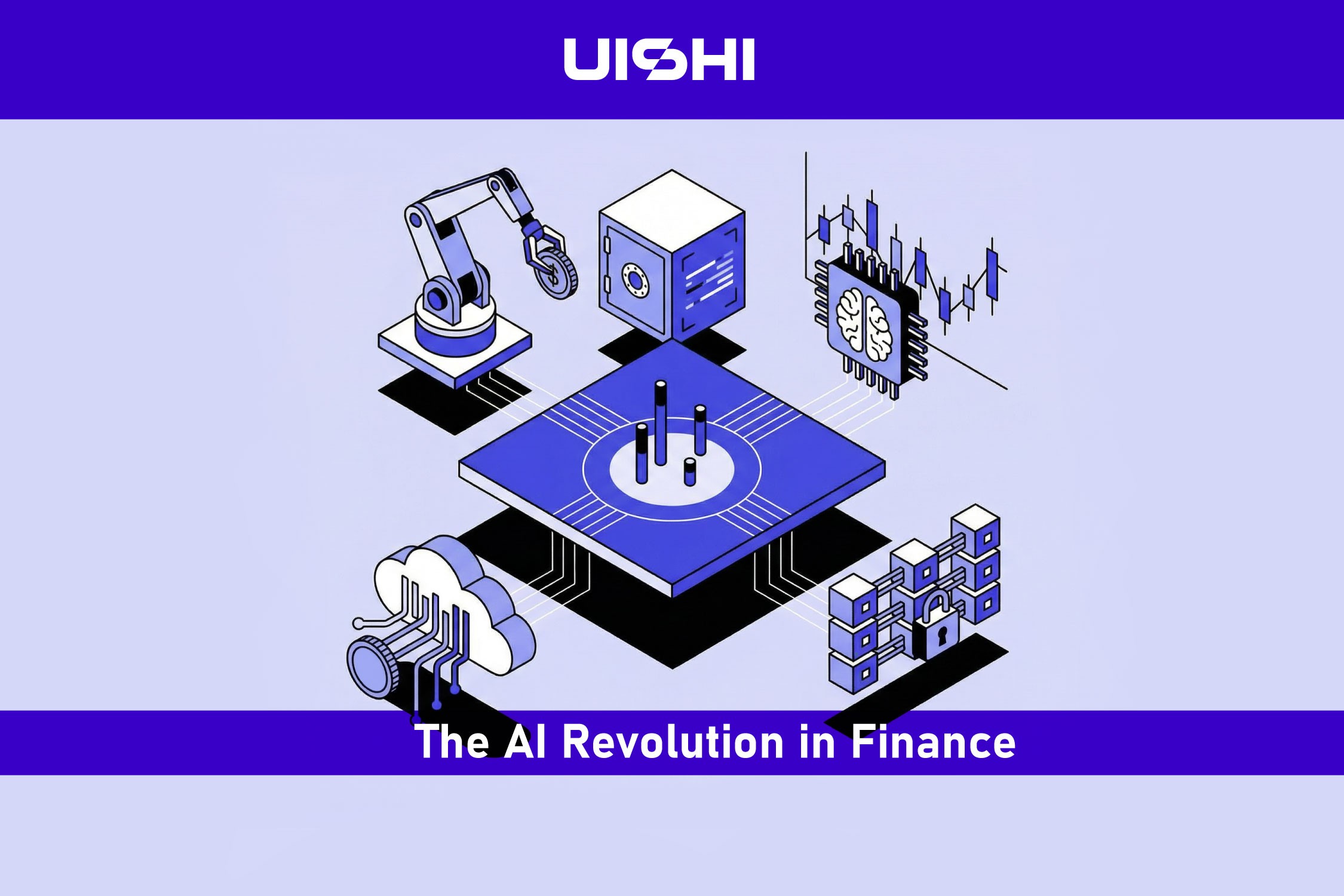
The AI Revolution in Finance
The Transformation of Financial Services
Artificial intelligence has moved from the realm of science fiction to become one of the most transformative forces in modern finance. Hedge funds and investment banks have embraced machine learning, natural language processing, and predictive analytics to gain advantages in markets that have traditionally relied on human judgment and intuition. The results have been substantial: improved risk management, faster execution, better prediction of market movements, and more efficient allocation of capital across the global financial system. AI has fundamentally changed what is possible in finance, creating capabilities that would have seemed unimaginable just a decade ago.
The transformation extends beyond the largest financial institutions to reshape the entire financial services landscape. Robo-advisors now manage billions of dollars in consumer portfolios, providing sophisticated investment management at fractions of the cost of human advisors. Algorithmic trading firms process millions of transactions daily, identifying patterns and executing strategies that no human could match. Even consumer-facing applications like fraud detection and credit scoring have been revolutionized by machine learning, with systems that learn and adapt faster than traditional statistical models. The finance industry of 2026 looks dramatically different from the industry of 2016, and AI has been the primary driver of that transformation.
The key insight from this transformation is not that AI replaces humans in finance, but that AI augments human capabilities in ways that produce dramatically better outcomes. The most successful financial organizations combine human judgment about strategy and risk with machine capabilities for execution and optimization. Humans set parameters and make important decisions; machines handle the countless tactical choices that compound into significant results. This combination has proven far more effective than either humans alone or machines alone, creating a new paradigm for financial services that increasingly defines industry best practices.
The Institutional Advantage Gap
The benefits of AI in finance have not been equally distributed. Institutional investors—hedge funds, pension funds, sovereign wealth funds—have invested heavily in AI capabilities and have captured the bulk of the benefits. They possess the capital to build sophisticated systems, the talent to develop and maintain them, and the scale to justify the investment. The result has been an increasing gap between institutional and retail capabilities that threatens to leave individual investors further and further behind.
This capability gap manifests in multiple dimensions. Institutions can analyze more data more quickly, identifying patterns and opportunities that individuals miss. They can execute trades more efficiently, capturing alpha before it dissipates. They can manage risk more dynamically, adjusting positions in response to changing conditions. They can optimize portfolios more sophisticatedly, balancing return and risk across multiple time horizons and scenarios. Each of these capabilities contributes to superior risk-adjusted returns, and together they create an increasingly significant advantage for institutional over retail participants in financial markets.
For decades, the response to this institutional advantage has been to democratize access to financial markets through technology. Online brokerages reduced trading costs. Index funds provided diversified exposure. Robo-advisors brought sophisticated portfolio management to retail investors. Each of these innovations helped narrow the gap, but they did not address the fundamental capability differential between institutions with AI systems and individuals without them. The gap remained, even if it was somewhat smaller than it might otherwise have been.
AI as a Democratizing Force
The emergence of accessible AI tools offers the possibility of a more fundamental narrowing of the institutional-retail capability gap. As AI capabilities become more accessible and easier to deploy, the barriers that have prevented individual investors and community organizations from accessing sophisticated financial tools are beginning to fall. What was once possible only for well-funded institutions is increasingly available to smaller players who can leverage cloud-based AI services, pre-trained models, and specialized platforms designed for accessibility.
This democratization is still in its early stages, and the benefits are not equally available to all. Communities and individuals face challenges that institutions do not: lack of technical expertise to develop and deploy AI systems, lack of capital to invest in sophisticated infrastructure, and lack of scale to justify significant investment. The potential for AI to democratize finance remains largely potential rather than reality, waiting for platforms and structures that can make sophisticated AI capabilities accessible to those without institutional resources.
This is where Uishi enters the picture. The premise of Uishi is that communities—acting collectively—can access capabilities that have traditionally been reserved for institutions. By pooling resources and sharing the costs of AI infrastructure, communities can achieve scale economies that individual members could not achieve alone. By building platforms specifically designed for community access, Uishi can provide AI capabilities to thousands of members at costs that would be impossible for any individual to bear. The result is a democratization of institutional-grade capabilities that has simply not been possible until now.
AI That Amplifies Rather Than Replaces
A crucial aspect of Uishi’s approach is that AI is not intended to replace human judgment but to amplify it. The most effective financial systems combine human strategic thinking with machine tactical execution. Humans set the parameters within which AI operates, define the risk boundaries that should not be crossed, and make the important decisions about overall strategy. Machines handle the countless decisions that must be made quickly, such as when to rebalance, how to allocate across opportunities, and when to exit positions. This division of labor plays to the strengths of each: human judgment for important, strategic choices; machine speed and consistency for tactical execution.
This approach also addresses legitimate concerns about AI systems making consequential financial decisions without human oversight. The AI agents that manage Uishi’s treasury do not operate autonomously in an absolute sense; they operate within boundaries set by the community through governance. Members vote on risk parameters, strategy selection, and overall approach. The AI executes within those parameters, optimizing within constraints rather than making independent choices about risk tolerance or strategic direction. Humans remain in control; machines simply enable humans to control more effectively.
The result is a system that combines the best of both worlds: the speed and consistency of AI execution with the judgment and accountability of human oversight. Communities get capabilities that approach institutional-grade without surrendering control to algorithms. Members can participate in governance knowing that their decisions matter and that AI is implementing their will rather than overriding it. This balance between human and machine is essential to Uishi’s vision of community-owned wealth creation.
The Future Is Happening Now
The AI revolution in finance is not a future event; it is happening now. The tools exist, the capabilities are proven, and the benefits are being captured by those who have access. The question is whether communities will participate in this transformation or be left behind. The institutions that have already invested in AI are widening their advantage; the gap between AI-enabled and AI-excluded participants is growing. Every day that passes without action increases the cost of catching up.
Uishi is built on the conviction that communities should participate in this transformation. By building AI capabilities specifically for community-owned treasuries, by making sophisticated treasury management accessible to groups that could never afford it individually, and by maintaining community control over AI operations, Uishi creates a path for communities to claim the benefits that have too long been reserved for institutions. The technology is ready. The question is whether the communities are ready to embrace it.
This is not speculation about an uncertain future; it is recognition of an already-unfolding transformation. AI-powered treasury management is coming to finance whether traditional DAOs participate or not. The only question is whether communities will be equipped to participate in the AI-enabled financial system or whether they will watch from the sidelines as others capture the opportunities they could have claimed. Uishi is building for participation, for community, for a future where wealth creation is genuinely democratized.
The Transformation of Financial Services
Artificial intelligence has moved from the realm of science fiction to become one of the most transformative forces in modern finance. Hedge funds and investment banks have embraced machine learning, natural language processing, and predictive analytics to gain advantages in markets that have traditionally relied on human judgment and intuition. The results have been substantial: improved risk management, faster execution, better prediction of market movements, and more efficient allocation of capital across the global financial system. AI has fundamentally changed what is possible in finance, creating capabilities that would have seemed unimaginable just a decade ago.
The transformation extends beyond the largest financial institutions to reshape the entire financial services landscape. Robo-advisors now manage billions of dollars in consumer portfolios, providing sophisticated investment management at fractions of the cost of human advisors. Algorithmic trading firms process millions of transactions daily, identifying patterns and executing strategies that no human could match. Even consumer-facing applications like fraud detection and credit scoring have been revolutionized by machine learning, with systems that learn and adapt faster than traditional statistical models. The finance industry of 2026 looks dramatically different from the industry of 2016, and AI has been the primary driver of that transformation.
The key insight from this transformation is not that AI replaces humans in finance, but that AI augments human capabilities in ways that produce dramatically better outcomes. The most successful financial organizations combine human judgment about strategy and risk with machine capabilities for execution and optimization. Humans set parameters and make important decisions; machines handle the countless tactical choices that compound into significant results. This combination has proven far more effective than either humans alone or machines alone, creating a new paradigm for financial services that increasingly defines industry best practices.
The Institutional Advantage Gap
The benefits of AI in finance have not been equally distributed. Institutional investors—hedge funds, pension funds, sovereign wealth funds—have invested heavily in AI capabilities and have captured the bulk of the benefits. They possess the capital to build sophisticated systems, the talent to develop and maintain them, and the scale to justify the investment. The result has been an increasing gap between institutional and retail capabilities that threatens to leave individual investors further and further behind.
This capability gap manifests in multiple dimensions. Institutions can analyze more data more quickly, identifying patterns and opportunities that individuals miss. They can execute trades more efficiently, capturing alpha before it dissipates. They can manage risk more dynamically, adjusting positions in response to changing conditions. They can optimize portfolios more sophisticatedly, balancing return and risk across multiple time horizons and scenarios. Each of these capabilities contributes to superior risk-adjusted returns, and together they create an increasingly significant advantage for institutional over retail participants in financial markets.
For decades, the response to this institutional advantage has been to democratize access to financial markets through technology. Online brokerages reduced trading costs. Index funds provided diversified exposure. Robo-advisors brought sophisticated portfolio management to retail investors. Each of these innovations helped narrow the gap, but they did not address the fundamental capability differential between institutions with AI systems and individuals without them. The gap remained, even if it was somewhat smaller than it might otherwise have been.
AI as a Democratizing Force
The emergence of accessible AI tools offers the possibility of a more fundamental narrowing of the institutional-retail capability gap. As AI capabilities become more accessible and easier to deploy, the barriers that have prevented individual investors and community organizations from accessing sophisticated financial tools are beginning to fall. What was once possible only for well-funded institutions is increasingly available to smaller players who can leverage cloud-based AI services, pre-trained models, and specialized platforms designed for accessibility.
This democratization is still in its early stages, and the benefits are not equally available to all. Communities and individuals face challenges that institutions do not: lack of technical expertise to develop and deploy AI systems, lack of capital to invest in sophisticated infrastructure, and lack of scale to justify significant investment. The potential for AI to democratize finance remains largely potential rather than reality, waiting for platforms and structures that can make sophisticated AI capabilities accessible to those without institutional resources.
This is where Uishi enters the picture. The premise of Uishi is that communities—acting collectively—can access capabilities that have traditionally been reserved for institutions. By pooling resources and sharing the costs of AI infrastructure, communities can achieve scale economies that individual members could not achieve alone. By building platforms specifically designed for community access, Uishi can provide AI capabilities to thousands of members at costs that would be impossible for any individual to bear. The result is a democratization of institutional-grade capabilities that has simply not been possible until now.
AI That Amplifies Rather Than Replaces
A crucial aspect of Uishi’s approach is that AI is not intended to replace human judgment but to amplify it. The most effective financial systems combine human strategic thinking with machine tactical execution. Humans set the parameters within which AI operates, define the risk boundaries that should not be crossed, and make the important decisions about overall strategy. Machines handle the countless decisions that must be made quickly, such as when to rebalance, how to allocate across opportunities, and when to exit positions. This division of labor plays to the strengths of each: human judgment for important, strategic choices; machine speed and consistency for tactical execution.
This approach also addresses legitimate concerns about AI systems making consequential financial decisions without human oversight. The AI agents that manage Uishi’s treasury do not operate autonomously in an absolute sense; they operate within boundaries set by the community through governance. Members vote on risk parameters, strategy selection, and overall approach. The AI executes within those parameters, optimizing within constraints rather than making independent choices about risk tolerance or strategic direction. Humans remain in control; machines simply enable humans to control more effectively.
The result is a system that combines the best of both worlds: the speed and consistency of AI execution with the judgment and accountability of human oversight. Communities get capabilities that approach institutional-grade without surrendering control to algorithms. Members can participate in governance knowing that their decisions matter and that AI is implementing their will rather than overriding it. This balance between human and machine is essential to Uishi’s vision of community-owned wealth creation.
The Future Is Happening Now
The AI revolution in finance is not a future event; it is happening now. The tools exist, the capabilities are proven, and the benefits are being captured by those who have access. The question is whether communities will participate in this transformation or be left behind. The institutions that have already invested in AI are widening their advantage; the gap between AI-enabled and AI-excluded participants is growing. Every day that passes without action increases the cost of catching up.
Uishi is built on the conviction that communities should participate in this transformation. By building AI capabilities specifically for community-owned treasuries, by making sophisticated treasury management accessible to groups that could never afford it individually, and by maintaining community control over AI operations, Uishi creates a path for communities to claim the benefits that have too long been reserved for institutions. The technology is ready. The question is whether the communities are ready to embrace it.
This is not speculation about an uncertain future; it is recognition of an already-unfolding transformation. AI-powered treasury management is coming to finance whether traditional DAOs participate or not. The only question is whether communities will be equipped to participate in the AI-enabled financial system or whether they will watch from the sidelines as others capture the opportunities they could have claimed. Uishi is building for participation, for community, for a future where wealth creation is genuinely democratized.